


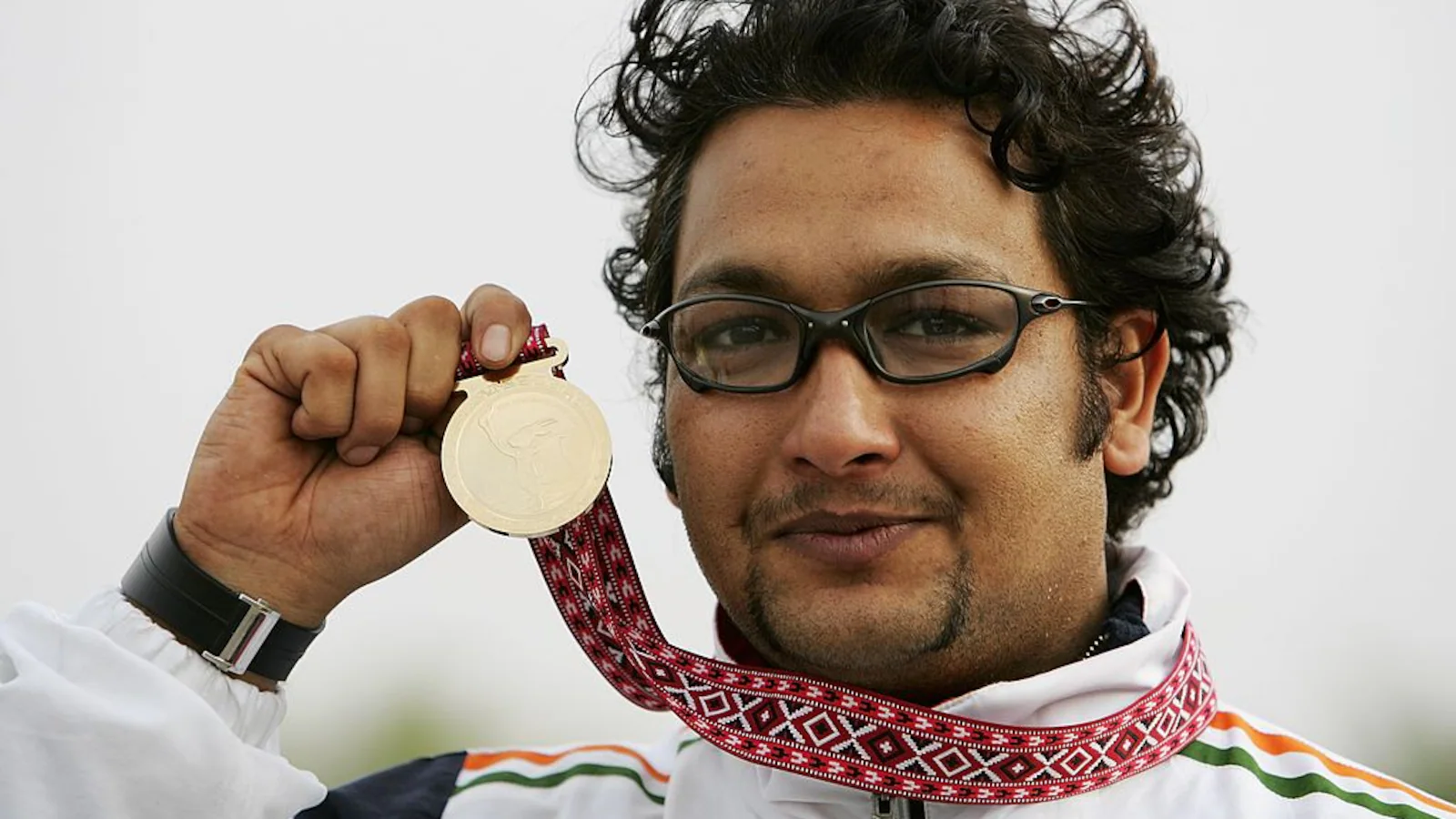
When Jaspal Rana spoke, Indian shooting listened. Not because he held an official position or cultivated influence behind the scenes, but because he had earned the right to be heard. Long before India became a shooting powerhouse, Rana was winning major titles, breaking records, and proving that an Indian shooter could compete with the world’s best.
Most athletes are remembered for their results. Rana is remembered for something rarer: he was willing to publicly challenge how the sport was run.
His career achievements were extraordinary. He burst onto the scene as a teenager, won gold at the 1994 Asian Games in Hiroshima, collected multiple Asian Games and Commonwealth Games medals, and became one of India’s most successful pistol shooters.
Even after establishing himself as a champion, he never adopted the safe, diplomatic language many elite athletes prefer. Instead, he became one of the sport’s most persistent critics and reformers.
Rana regularly questioned selection processes, administrative decisions, coaching philosophies, and policies he believed hurt athletes. His criticism was often precise rather than abstract. In 2024, he publicly challenged aspects of the National Rifle Association of India’s selection process, arguing that frequent policy changes created uncertainty and disrupted long-term preparation. He maintained that consistency and transparency were essential for sustained success at the highest level.
Not everyone welcomed that approach. Some viewed his interventions as unnecessarily confrontational, arguing that constant criticism risked instability. Rana’s response, implicit or explicit, was consistent: avoiding difficult conversations would not improve results.
Those views often put him at odds with officials, but he rarely softened his stance.
One issue he pursued relentlessly was the cost of competing in shooting. Success in the sport depends heavily on imported, specialized equipment. Rana repeatedly highlighted how taxes and duties made elite equipment unaffordable for many aspiring shooters.
When shooting equipment fell under a high GST burden, he became one of its most vocal critics, arguing that excessive costs created unnecessary barriers and restricted access for young talent. For Rana, elite ambition required elite equipment.
That willingness to confront difficult issues made him a polarizing figure. Supporters saw someone defending athletes when few others would, while critics questioned whether his confrontational style sometimes created unnecessary friction.
Even those who disagreed with him often acknowledged that his arguments came from deep investment in the sport.
Perhaps the clearest example of his intensity was his fallout with Manu Bhaker before the Tokyo Olympics. The coach–athlete relationship deteriorated amid disagreements that became one of the most discussed controversies in Indian shooting. For many observers, the split seemed destined to define both careers.
The fallout illustrated both Rana’s greatest strength and his greatest weakness. His uncompromising standards could push athletes toward excellence, but they could also create friction. Rana expected professionalism because he believed international success required nothing less. He was not interested in being popular; he was interested in producing champions. The episode ultimately became less about conflict and more about mutual respect shaped by high expectations.
What followed was more revealing. Over time, communication resumed, mutual respect returned, and the relationship was rebuilt. Their reunion before the Paris Olympics became a story of reconciliation and renewed purpose, culminating in Bhaker’s Olympic medal-winning performances.
The episode showed that Rana’s disagreements, however sharp, were rarely personal. His focus remained performance, accountability, and what he believed was best for Indian shooting.
His coaching reflected the same philosophy. Athletes who trained under him described demanding sessions, strict standards, and an obsession with technical precision.
He expected professionalism because he believed international success required nothing less. His focus was always on performance over approval.
Those who worked closely with him often spoke about the culture he created—one built on discipline, self-belief, and mental resilience. Many credited him with instilling the confidence required to perform under pressure at the highest level.
What also set him apart was his conviction during an era when Indian shooting lacked today’s infrastructure, funding, and visibility.
In the 1990s, Indian shooters were not expected to dominate global competitions. Rana rejected that limitation, carrying himself with the belief that Indian athletes belonged on the same range as the world’s best—and could beat them. That mindset helped reshape expectations within the sport.
His influence spans two generations. First, he helped establish India’s credibility in international shooting through his performances. Later, as a coach and mentor, he helped develop the athletes who carried that success forward.
Few figures have shaped both phases of the sport’s evolution.
Whether challenging administrators, advocating for athletes, or pushing for systemic change, Rana rarely chose the comfortable position when he felt the sport’s future was at stake.
Ultimately, Jaspal Rana’s legacy extends far beyond medals, records, and titles. He raised uncomfortable questions when others stayed silent, demanded higher standards when complacency was accepted, and pushed Indian shooting toward greater professionalism and ambition.
That is why he remains one of the most outspoken figures Indian shooting has ever produced.